Search results for
tips how to shape tuile cups
Filter Results
Sort By:
Recipes
(75)

Recipes
While they’re warm, these tuiles are draped over a cannoli mold or a narrow rolling pin to give them their shape. To make edible bowls for serving scoops of ice cream or sorbet, shape the warm cookie rounds over inverted muffin tins or ramekins instead.
Quick
Recipes
The tuile batter can be made 1 day in advance. Refrigerate it in an airtight container until you’re ready to bake.
Recipes
This recipe is much easier to make than conventional tuiles because the batter isn’t as fussy and it doesn’t need to be painstakingly spread out on a baking sheet with a spatula. The heat of the oven takes care of the spreading, making sure that the cookies expand to the right dimensions as they bake. No, unfortunately, the oven can’t mix up the batter for you, but maybe in a few years kitchen technology will make that an option. The cookies can be coaxed into an endless variety of shapes warm out of the oven—they can be curled over a rolling pin for traditional tuiles, wrapped around the handle of a wooden spoon into cigar-like tubes, or molded over the bottom of an overturned teacup into nifty cookie cups for holding ice cream. You’ll have to do that part yourself, too, but then again, why let your oven have all the fun?
Recipes
Preparation time: 10 minutes to make the batter, 1 1/2 hours resting time for the batter, and approximately 10 minutes baking time.

Recipes
This fish is steamed on plates, which hold the marinade and juices around the fillets. Be sure that the plates you use have enough of a rim to hold some liquid, and are not larger in diameter than the pan you'll be using to steam.
In order to fit the plate on top of the steamer, you'll need a steamer basket that's flat all the way across, without a central protrusion. Many Asian bamboo and stainless-steel steamers have this shape but, if you don't have one, you can substitute a ramekin: Simply place the ramekin on the bottom of the pan, fill the pan with water just to the height of the ramekin, and place the plate on top of the ramekin.
In her video demonstration, Chef Cheng uses sole fillets for this dish, but any white, flaky fish such as halibut or flounder, would work well.
Quick
Recipes
Preparing foods en papillote, which loosely translates to “wrapped in paper,” is actually another way to steam food, even though it takes place in the oven rather than on the stove. It is most commonly used for fish fillets but is also well suited to shellfish and leaner cuts of chicken, such as boneless breast halves. This French technique always manages to impress, the pretty little packages resembling gifts, one for each guest. When the packets are slit open—ceremoniously, at the table—their fragrant aromas are released all at once, hinting at the tastes to come. These bundles are ideal for entertaining, but cooking en papillote has other advantages, too. The packets can be assembled a few hours ahead of time (covered with plastic wrap and refrigerated on a baking sheet) and then tucked into the oven once your guests arrive. And, like other steaming methods, it doesn’t require much added fat; instead, the sealed parchment traps in all that wonderful moisture and flavor. In this recipe, a compound butter helps bring all the components together while adding richness to the dish. Forming the packets is easy—no special skills required. The shape isn’t as important as making sure the edges are tightly sealed. You can fold the parchment into envelopes, wrap it into bundles, or form it into bags, but half-moon packets are the classic shape. The traditional technique begins by cutting paper into a heart shape, but this one starts out as a simple rectangle.
Recipes
These lightly sweet tuiles are savory enough to stand in for bread or crackers, and their lacy appearance dresses up any plate.

Recipes
Packed with greens, these boiled dumplings easily go vegetarian by switching out the ground pork for crumbled tofu.
Recipes
It’s best to bake these cookies on cool, dry days so they can form and retain a curved shape. Because they are fragile, first line airtight containers with several layers of paper towels, then lay tuiles on top, in one layer, without crowding.

Recipes
Umami lovers rejoice. This savory vegetarian mushroom galette recipe features mushrooms two ways: in a rich duxelles-style spread and scattered over the top.
5.0
(4.92)
Recipes
These small sausage balls, with their rice “quills” poking outward, are a dream for entertaining. They can be prepared ahead of time and refrigerated for up to 2 days before cooking to serve warm. The green tea leaves season the sausage with an exotic savor, and a side plate of hot-sweet mustard, soy sauce, and Asian sesame oil for dipping, all out of a jar or bottle, suffice to complete the dish’s charm. Although the meatballs have a pedigree in Chinese cuisine made with glutinous, or sweet, rice, I prefer to use regular rice. If you don’t have a bamboo steamer basket, a plate lined with lettuce leaves can substitute. The trick here is to rig up something, such as an empty can in the bottom of the pot, to elevate the plate above the water. Covering the pot will allow enough steam to collect around the plate for the balls to cook.
Recipes
I first tasted pot stickers in the late 1980s at the tiny Mandarin Deli in Los Angeles’s Chinatown. Behind the glass window, a dumpling maker steadily worked, rolling out thin wrappers, filling them, and creating large pea pod–shaped dumplings. I watched intently, distracted only when my fragrant pot stickers arrived. The hearty dumplings were so hot that I burned my mouth, but they were well worth the minor injury. Pot stickers supposedly started out as boiled dumplings that a chef forgot about in the wok (guō) and they stuck (tiē) after the water had cooked away. His guests loved the contrasts between succulent filling, tender-chewy skin, and crusty bottom, and thus the pot sticker was born. The modern way to mimic the chef ’s delicious accident is to cook pot stickers in a skillet with water and oil, which steams the dumplings and fries their bottoms to a golden, toasty finish. They are technically called jiānjiao in Chinese, which means shallow-fried dumplings; but in the West, we commonly know them as pot stickers and pan fried dumplings. “Fried” dumplings can be pan fried or deep-fried.
Articles
(219)

Shopping
If a cup is annoying to clean or hard to read, banish it from your kitchen now.
Francesca Krempa

Cooking
Pick your mood—chewy, crispy, soupy, fancy—then pick your method.
Hetty Lui McKinnon

Culture
Goodbye glass, we’re onto new materials.
Zoë Sessums

Cooking
Who said bigger is better?
Hetty Lui McKinnon

Cooking
How to make dumplings that look great and taste better.
Hetty Lui McKinnon

techniques
Learn to score your fish properly and cash in on even more crispy bits.
Bon Appétit
Videos
(193)

icon
We love the way the platter looks using large, similarly shaped endive leaves, but any tough green will work in a pinch.
icon
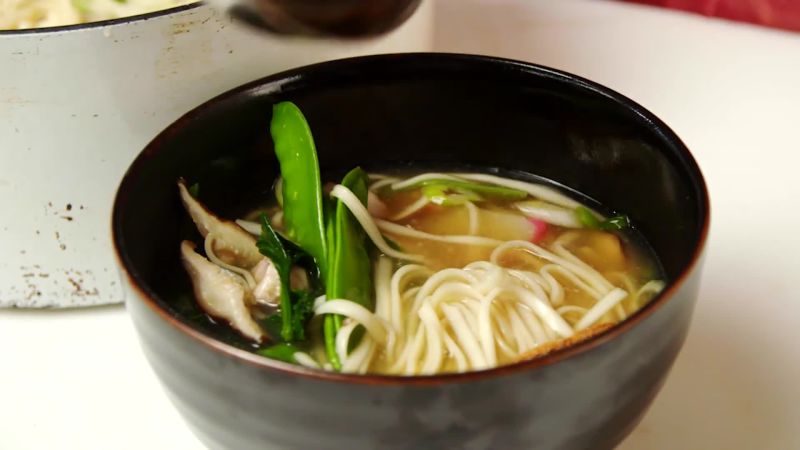
We show you how to make our favorite udon soup!

icon
We show you how to make sizzle pan salmon.

icon
Think of these scones like freeform blueberry muffins. You'll be surprised how easy it is to make them!

icon
Learn how to turn egg shells into perfect serving dishes with one simple tool. Chef Jean-Georges Vongerichten shows you how.

icon
Take your vegetables to a whole new level with three creative but simple methods: charring, tandoori roasting and steaming...with a twist.