Search results for
slideshows how to cook a whole fish
Filter Results
Sort By:
Recipes
(76)

icon
Culture

Recipes
Serving whole fish during Chinese New Year symbolizes the wish for prosperity throughout the year and many happy returns. When you serve whole fish, it's traditional to point the head toward the most distinguished guest.

Recipes
Making a whole fish is so cinchy that it’s almost not fair. It looks like you’ve put so much time and effort into it, and it’s so elegant and beautiful on a serving platter, but really, all you have to do is jam a fish full of herbs and lemon and toss it in the oven until its eyeball pops out! I think this is the coolest part—Mother Nature’s own pop-up timer—I bet that’s how they invented the pop-up turkey timer!
Recipes
It doesn’t take long, but this dish requires a fairly large pan. A long, narrow roasting pan will do in a pinch, especially if it’s nonstick. If you have trouble getting the fish to fit into your pan, by all means cut off its head and tail. Or try making this with smaller fish, in the 2- to 3-pound range. Then, when you feel you’ve gotten the hang of browning a whole fish, move on to larger specimens. This is a blast to eat—and should have enough sauce to make plain white rice a terrific accompaniment. A simple Chinese-style vegetable like Snow Peas with Ginger (page 470) would make the meal even better.

Recipes
Steamed fish with potatoes get drenched in a flavorful brown butter infused with anchovies and chives for a bistro-like meal that comes together in no time.
4.0
(4.2)
Recipes
In many Asian cuisines, a common way to steam whole fish (usually surrounded by aromatics) is on a plate that is customarily set in a very large wok. The plate captures the juices that collect during cooking and create a flavorful broth. You can set the platter in a roasting pan if the fish is quite large, but use a wok if yours will accommodate. You‘ll have about a cup of broth after the fish has finished cooking, so use a platter deep enough to hold it. Then, be sure to drizzle some over each serving. Set out bowls of steamed rice and bok choy or wilted spinach along with more Asian fish sauce, a traditional table condiment.

Easy
Recipes
Most 1”-thick pieces of fish will cook in 30 minutes. If the fish is done before you're ready to sit down, simply turn off the oven—it will hold. If it isn't quite ready when you are, crank up the heat to 350° and it'll finish quickly.
4.3
(4.34)

Recipes
When it comes to frying fish, a whole fish is a whole lot more forgiving than fillets and easier to cook. And did we mention that crispy, flaky skin?
4.5
(4.5)
Recipes
The first time I ate at the Atelier of Joël Robuchon in Paris, I saw a whole fish delivered to another customer that I could tell had been boned and deep-fried. The skeleton had been removed but the head and tail, which flipped up so nicely on the plate, had been left intact. I watched in awe as the diner carved into the fish and ate it head to tail, without any of the usual fuss required to eat around the bones of a whole fish. I was so impressed that I told Matt I wanted to put something like that on the Osteria menu. He chose to grill the fish rather than fry it, but it’s the same idea. We chose to use orata, also called dorade or sea bream, a classic Mediterranean variety, because you see whole branzino on every Italian menu from California to Campagna, and we wanted to introduce our customers to something different. We wrap the fish in a fig leaf in the fall and a radicchio leaf the rest of the year before grilling it in order to contain the herbs stuffed inside the fish. Boning the fish is the most difficult part of making this dish—and I won’t lie to you: it is tricky. I promise that with patience, a good sharp knife (preferably a fish knife or a 6-inch boning knife) and fish tweezers, you will be able to do it.

icon
Recipes
Quick
Recipes
Pan-frying is best for thinner fillets and steaks, or for whole fish that are no more than 1 inch thick. Season the fish with salt and pepper and other seasonings such as chopped fresh herbs or crushed spices as desired. For skinless fillets, heat a heavy sauté or frying pan until quite hot; add just enough oil, clarified butter, or a mix of oil and whole butter to cover the bottom of the pan. Carefully add the fish and cook over medium-high heat for 3 minutes (4 to 5 minutes for whole fish) and then turn. Cook for another 3 minutes and test for doneness. Remove the fish from the pan when it is just slightly underdone, as it will continue cooking in the residual heat. When cooking fish with skin, add more fat to the pan, about 1/8 inch deep. Put the fish into the pan skin side down. The skin will shrink while it cooks, pulling the fish up from the bottom of the pan. To keep the skin next to the hot pan (which is necessary to crisp it), weigh the fillets down with a foil-wrapped skillet that is slightly smaller than the one used for the cooking. This will hold the fillets fl at and ensure even crisping of the skin. Cook the fillets on their skin for the majority of the time, about 5 to 7 minutes, depending on their thickness, then turn them and cook on the flesh side for just another minute or two, or until done. Remember that the pan must be quite hot before the fish is added; this will keep it from sticking. Also, don’t crowd the fish or it will sweat and give off liquid, ruining any chances of browning and crisping. Lastly, don’t overcook the fish. A quick pan sauce can be made aft er you have removed the fish and poured off the cooking fat. Add tomato sauce to the hot pan and stir in all the brown bits left on the pan for added flavor, or deglaze the hot pan with wine or lemon juice and finish with a swirl of butter or extra-virgin olive oil and a handful of herbs. Add a handful of toasted nuts for flavor and texture. The striped bass fishery, once endangered, has fully recovered and is now flourishing. This fish is especially delicious with its skin left on and sautéed until brown and crispy.
Recipes
Fish and shellfish are superb grilled. The searing heat quickly seals in juices and delicately perfumes the flesh with smoke. Fish can be grilled as fillets, as steaks, or whole. Shellfish such as scallops and oysters can be grilled in the shell or shucked. Shrimp can be grilled peeled or unpeeled. All these are delicious seasoned with nothing more than salt and pepper and a squeeze of lemon, but advance marinades of olive oil and herbs, tangy salsas such as the peach (page 231) or tomato (page 231), and Herb Butter (page 48), Béarnaise (page 229), or warm butter sauce (page 228) are also possibilities. A hot fire is best for everything except large whole fish. Use the hand test: you should be able to hold your hand an inch or two over the grill for no more than 2 seconds. The grill should be preheated, cleaned, and, most importantly, oiled, just before putting on the fish, to help keep it from sticking. Season fish fillets and steaks with salt and pepper and brush them with oil before putting to grill. Or marinate them with a combination of herbs, spices, citrus zest, and olive oil. Let fish sit in a marinade for at least an hour to allow the flavors to penetrate. An average fillet about an inch thick will take 6 to 8 minutes to cook. If the skin has been left on (it gets crispy and delicious cooked on a grill), place the fillet skin side down and cook it mostly on the skin side. Check for doneness after about 6 minutes, and turn at the last minute to sear the other side. A fillet without the skin should be cooked 3 to 4 minutes on each side. Rotate after about 2 minutes to make crosshatched grill marks. Check for doneness after about 6 minutes, and turn at the last minute to sear the other side. To test, press on the flesh with your finger or a spatula, or probe the flesh with a knife. The fish is done when the meat is just set and slightly firm to the touch but still moist. Fish such as salmon and tuna are delicious seared on the outside and very rare inside, still shiny and translucent. Remember that the fish will continue to cook after it is taken off the grill. If cooked for too long, fish can become quite dry. A fish steak is a cross-section at least 1 inch thick that contains some backbone and is surrounded by the skin. Grill the same way as a skinless fillet, but turn it after 5 minutes and check for doneness after 8. Check by feel or by cutting into the flesh near the backbone to see inside. The flesh should separate easily from the bones but still be quite moist. A whole fish should be scaled and gutted; any fishmonger will do this. Cook the fish whole and unboned, with its head on, if possible; the fish will be more succulent. Season well with salt and pepper or marinate as described above, turning the fish now and then in the marinade. Cook smaller fish like anchovies and sardines over a hot fire, threaded on skewers for easy turning. (I love fresh anchovies marinated with a little chopped mint and grilled over a searing hot fire.) Trim off the fins and the tail-ends of larger fish (kitchen shears make short work of this chore). The belly cavity can be stuffed with lemon slices and herbs. Because they take much longer to cook, big fish need a medium-hot fire. To turn over a big fish on the grill, gently roll it as often as necessary to keep the skin from burning. Measure the fish at its thickest point and allow about 10 minutes per inch. A good friend of mine catches big fish, cleans and scales them, and grills them wrapped entirely in fennel fronds or herb branches, or sometimes in tender leafing branches from his lemon tree, tied in place with wet string. This overcoat of greenery steams and perfumes the fish and they taste divine. Whole fish are done when the flesh easily separates from the bone. If tied up in greenery, unwrap it, and gently separate the fillets from the central backbone, picking out any rib bones that come off with the fillets. Shucked scallops, oysters, squid, and shrimp (peeled or ...
Articles
(126)

Cooking
I overcame my fear of cooking whole fish by—you guessed it!—making this whole fish recipe. Wow!
Alex Beggs

Cooking
In French it's known as "en papillote" in case you wanna be fancy
Julia Bainbridge

Cooking
No stinky kitchen. No splattering oil. No razor-thin edge between over- and under-cooked.
Molly Baz

Cooking
This week on the Dinner SOS podcast, Chris and Shilpa help two salmon lovers add some new fish recipes to their repertoire.
Bon Appétit Staff & Contributors

techniques
A whole grilled fish looks (and tastes) impressive--assuming you can neatly dispatch it into fillets. Follow these steps, and pretty soon you'll be showing off at the table
Bon Appétit

test-kitchen
That's a cake tester poking in the side, there
Chris Morocco
Videos
(150)
icon
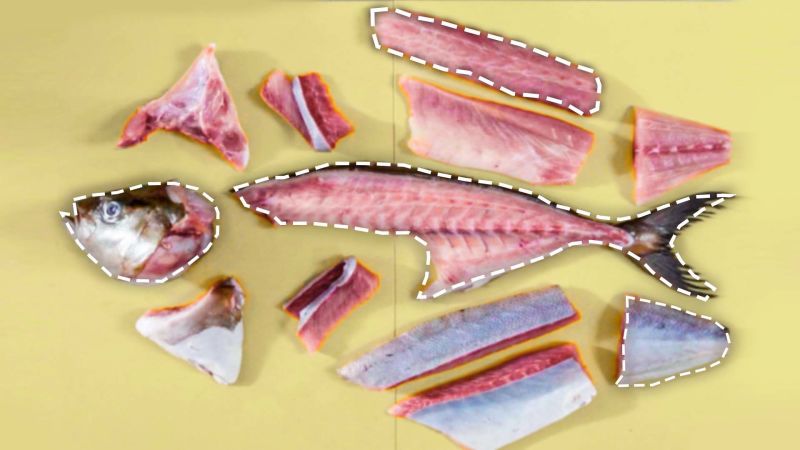
Japanese chef Yuji Haraguchi, owner of OKONOMI // YUJI Ramen in New York, demonstrates how he butchers an entire kampachi and transforms it into six varied dishes.
icon
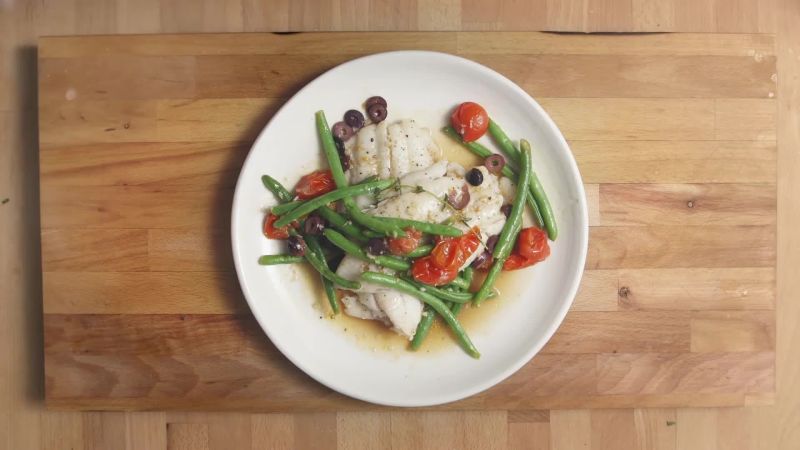
We show you how to transform fish into an impressive dinner in the microwave.
icon
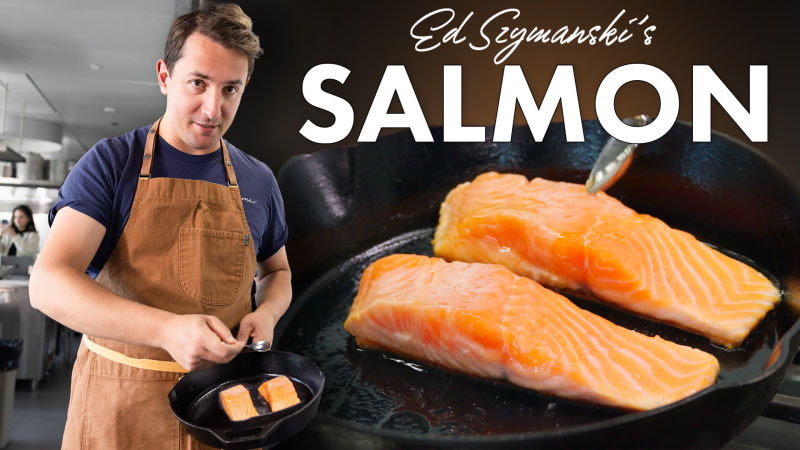
Learn how to make perfectly crispy-skinned pan-seared salmon at home with chef Ed Szymanski in the Bon Appétit Test Kitchen. Learn how to choose the freshest salmon and master getting ultra-crispy skin without overcooking your fish. Served with a rich lemon caper brown butter sauce and Dijon spinach, this easy salmon recipe is a foolproof weeknight dinner that's ready in about 20 minutes.

icon
Cody Auger, chef/owner of Nimblefish in Portland, Oregon, breaks down 11 whole fish and turns them each into a single piece of nigiri. Watch as he scales, fillets and prepares Red Sea Bream (Tai), Threeline Grunt (Isaki), Golden Eye Snapper (Kinmedai), Young Gizzard Shad (Shinko), Sardine (Iwashi), Horse Mackeral (Aji), Trevally Jack (Shima Aji), Yellow Striped Butterfish (Takabe), Beltfish (Tachiuo), Bigfin Reef Squid (Aori Ika) and Bigeye Tuna (Maguro).
icon
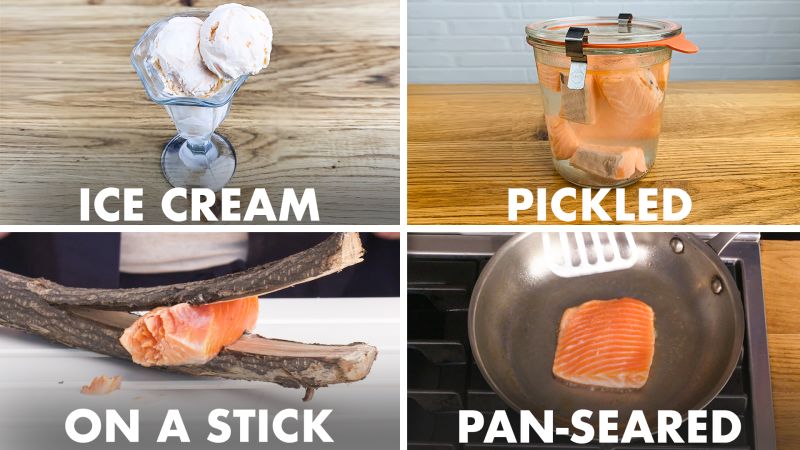
You know, salmon ice cream isn't as bad as it sounds, though maybe don't give it to your children unless they know what they're signing up for. Join Amiel Stanek as he attempts to cook salmon in almost every way possible, including pan-seared, coffee machine-cooked and moss-wrapped over campfire.
icon
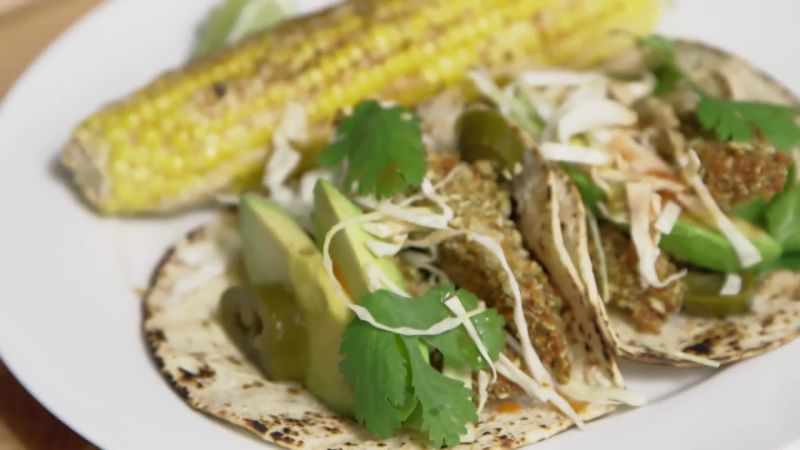
We show you how to make delicious, crispy fish tacos without the messy frying.