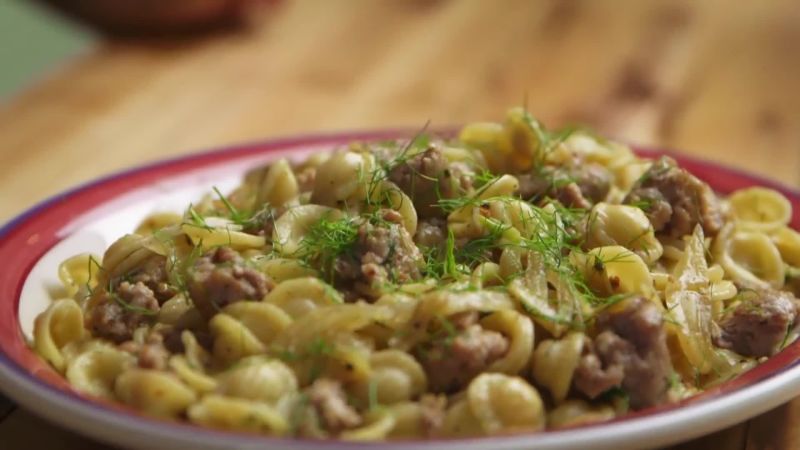
Fennel remains exotic enough to be a treat for many people, and this simple preparation simply elevates its stature a bit. Trim and discard the hard, hollow stalks that jut out from the top of the bulb; if you get your hands on a bulb with its fronds still attached, roughly chop them and add them to the hot oil with the garlic.
This is an antidote to every side salad that ever was. Instead of meh greens, it’s got shavings of fennel that bend and twist but keep their refreshing crunch.
This is a festive entrée for a holiday dinner. The aromatic vegetable stock is made right in the baking dish as the fennel cooks, and then turned into a rich sauce. The trick to carving out the fennel bulbs is to leave the sturdy outer layers intact, no less than 1/2 inch thick, or the bulbs can fall apart. If you like, you can mince half of the fennel scraps and add them to the filling. If you can’t find chestnuts, substitute toasted walnuts. Serve with a light, fluffy grain like rice or quinoa.
Fennel is among the most versatile of vegetables: it’s good whether it’s eaten raw in salads, or cooked in any number of ways, and I use it as an aromatic vegetable, often instead of celery, in mirepoix (diced carrot, onion, and celery) and other preparations. Cultivated fennel forms a compact, pale white bulb that is topped with fibrous green stalks and feathery leaves. The flavor is reminiscent of anise or licorice. Look for firm, undamaged bulbs that have no signs of drying or shrinking. The fronds should be fresh and vibrant. To prepare fennel, trim away the darker fibrous stalks and bottom end, and remove any outer layers that are tough or blemished. Fennel should be cut close to the time it is needed, as it will oxidize and brown over time. Cover cut fennel with a damp cloth to protect it. Many recipes ask you to remove the core, but I don’t find it necessary; on the contrary, I like the taste of the core and find it quite tender. The feathery dark green fennel leaves can be stripped from the stalks and chopped to use as a flavorful garnish. Wild fennel is an uncultivated variety of fennel that does not produce a bulb. Its leaves, flowers, pollen, and seeds are all very flavorful and useful in stuffings, marinades, garnishes, and sauces. If it grows in your region, forage for it in the wild.
No need to prep everything ahead: Get your chopping in while the fennel cooks. Just keep an eye on the pot!
Recipe: http://shape-flow.today/recipe/clams-in-white-bean-sauce%3C/div%3E%3C/div%3E%3C/div%3E%3C/div%3E%3C/div%3E%3C/div%3E%3C/div%3E%3Cdiv class="StackedRatingsCardWrapper-RIFgn jsPKbl SummaryCollectionGridSummaryItem-ilztYA cpHIzM search_result_item-578d2f410150278b02e39179">
Roast chicken is the perfect dish for a crowd. Contributing Editor Allison Roman recommends slow-roasting with fennel and fingerling potatoes. Castelvetrano olives and oranges add a slightly briny and bright citrus flavor.