The cakes, cookies, or pies may have lured you into this book, but you are about to meet your favorite recipe. This bread dough is always tasty, very forgiving, and can be fashioned into nearly any style or variety of bready item. It takes a very “don’t take yourself so seriously!” approach to bread baking and is the easiest, most versatile recipe in the book—your resulting bagel bombs, volcanoes, brioche, focaccia, and croissants will be proof of that. Make this dough one day, refrigerate it, and use it the second, third, or fourth day, if need be. Or freeze it for up to 1 week; just make sure to let it come to room temperature before using.
The secret behind many great breads is something called a preferment, a portion of the dough that ferments separately from (and for more time than) the rest of the ingredients. A preferment increases the strength of your dough (improving its final crumb structure) and contributes to aroma and flavor. In baker Bryan Ford’s cookbook New World Sourdough, the preferment is a sourdough starter; in this recipe, however, his preferment is the lower-maintenance poolish—a mixture of flour, water, and active dry yeast that grows overnight. Mix the poolish with more flour, water, and yeast as well as a touch of olive oil, sugar, and salt, and you get a resilient, flavorful dough that can be used in a nearly infinite number of ways. This is an instance when you really do need a kitchen scale—Ford encourages all bakers, especially beginners, to use one. The master dough can also be scaled up or down as desired.
When I have the urge to bake bread on a weekend and want something not quite so time-consuming as French bread, I often make this loaf. It is a healthy bread with a good texture and makes particularly delicious sandwiches. It is also great toasted for breakfast.
If you’re looking for a simple recipe for a tender sandwich bread—the kind of loaf that’d be great turned into a grilled cheese or crunchy croutons—this is it. This recipe from Bryan Ford is his Master Bread Dough, rolled into a tight log and baked until golden brown. We recommend slicing it and then freezing in a resealable plastic bag or airtight container for instant toast.
Editor's note: To make your own sourdough starter, follow Beranbaum's instructions.
This bread is as homespun as bread can get, using a stiff sourdough starter cultivated from wild yeast. It has a characteristic sourdough profile: tangy, complex flavor; thin, crisp crust; and springy moist crumb with uneven holes of moderate size.
I love this small loaf because of the size of the whole slices when cut. Also, for those who may have just one banneton (dough-rising basket), I wanted to provide a recipe for just one loaf. A loaf of this size is ideal for two people for three days, with a few slices to share with anyone who comes by to visit. If your family is larger, you will want to double the recipe.
Sharing the sourdough starter for bread is a time-honored tradition around the world. I got my first starter from Kurtis Baguley, a baker in San Francisco. And when my friend Angelica Pulvirenti asked me for a bread recipe to use on her boyfriend's boat, one that was easy and had good keeping qualities (so it wouldn't mold from the humidity), I gave her this recipe and some of my starter to make it. She was especially delighted because sharing a bread starter was a long-standing custom in a small village near Ragusa, Sicily, where she grew up. She said that her mother, at the end of baking day, always passed some of her unbaked bread dough to her friends. She loved the sense of community this imparted and is thrilled that she and I are continuing it.
TIME SCHEDULE
Stiff Sourdough Starter: minimum 13 hours, maximum 34 hours Minimum Rising Time: about 9 hours Oven Temperature: 475°F, then 450°F Baking Time: 25 to 30 minutes
Homemade bread crumbs are one of those "chefs secrets"—an important but often overlooked detail that can make a dish. These easy-to-make crumbs are flaky, mild, and versatile—they dont have that heavy whole-wheat taste and dense texture that most store-bought brands have. Since bread crumbs are a comfort-food cornerstone used in everything from cutlet coatings to casserole toppings, its key to have the best.
Brighten up your holiday party with this Monkey Bread recipe!
Get the recipe here: https://shape-flow.today/recipe/monkey-bread%3C/div%3E%3C/div%3E%3C/div%3E%3C/div%3E%3C/div%3E%3C/div%3E%3C/div%3E%3Cdiv class="StackedRatingsCardWrapper-RIFgn jsPKbl SummaryCollectionGridSummaryItem-ilztYA cpHIzM search_result_item-5d16210577c00d00084846c8">
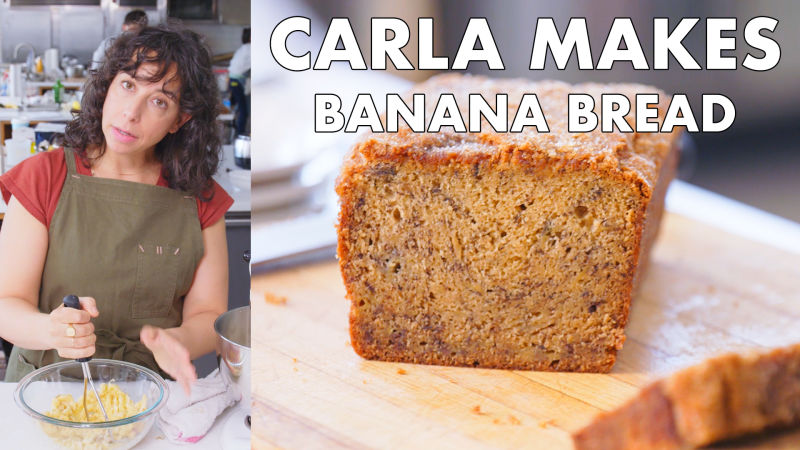
Join Carla Music in the Bon Appétit Test Kitchen as she makes BA's best banana bread. Here at BA everybody has their favorite banana bread recipe. We made every one—14 to be exact—until we came up with a collective favorite. Dark brown sugar is key and a dollop of mascarpone makes for superior tenderness. Walnuts optional but encouraged.
Edan Leshnick, head pastry chef at Breads Bakery in New York, takes us behind the scenes to demonstrate and explain every tool he and the staff use in preparing their supremely popular baked goods. Joined for the tour by Darwin Castillo, head of the bread department, get an in-depth look at a professional high-volume bakery in action - with massive dough mixers and immersion blenders supplying roaring deck ovens.
In this episode of 'Handcrafted,' co-founder of Tartine Bakery Chad Robertson walks us through the process of making three different types of bread from scratch, including country sourdough, porridge bread and sprouted rye bread.
Join Molly in the Test Kitchen as she makes pumpkin bread with maple butter! Pumpkin Spice Bread gets all grown up thanks to the addition of fresh ginger in this super-moist no-fuss bread with a crunchy pumpkin seed topping.
Check out the recipe here: https://shape-flow.today/recipe/pumpkin-bread-with-salted-maple-butter%3C/div%3E%3C/div%3E%3C/div%3E%3C/div%3E%3C/div%3E%3C/div%3E%3C/div%3E%3Cdiv class="StackedRatingsCardWrapper-RIFgn jsPKbl SummaryCollectionGridSummaryItem-ilztYA cpHIzM search_result_item-655643712801e74720d6e436">
Failure, heartache, and heartbreak are what it takes to create a new take on a classic recipe. Join Rachel Gurjar in the Bon Appétit Test Kitchen as she spends two days creating the perfect cheesy cornbread–a recipe that took 80 servings to get right.
You can check out Rachel's upside-down cornbread recipe here: https://bonappetit.com/recipe/upside-down-cornbread